- Method-specific aftercare overrides general online advice.
- Do not deep-clean residual treatment zones without permission.
- Record physical evidence and monitoring results by date and room.
The days after a visit matter as much as the visit itself. This guide explains what to do and what to avoid. It is part of our bed bug treatment overview.
Before the team leaves
Ask for the service record, the products used, the re-entry time and the airing rules. Also ask about cleaning limits and the next visit. Check which bags or furniture must stay sealed and how to leave the monitors. If you are still picking a firm, our guide to choosing a pest controller lists what to ask.
If the team left a residual product, find out which surfaces you must not wash yet. The HSE says everyone who uses biocides must use them correctly and follow the label. Follow the firm’s written aftercare notes. Our guide to home products explains why you should not add your own.
Bring belongings back in stages
Do not undo careful prep in one afternoon, because that can spread bugs. Instead, keep clean fabrics apart from the rest and follow the firm’s order.
Check each box before you open it. Do not carry items into a room outside the work zone, because you may bring bugs back in. Our preparation guide explains how to sort things.
Watch the signs, not your worries
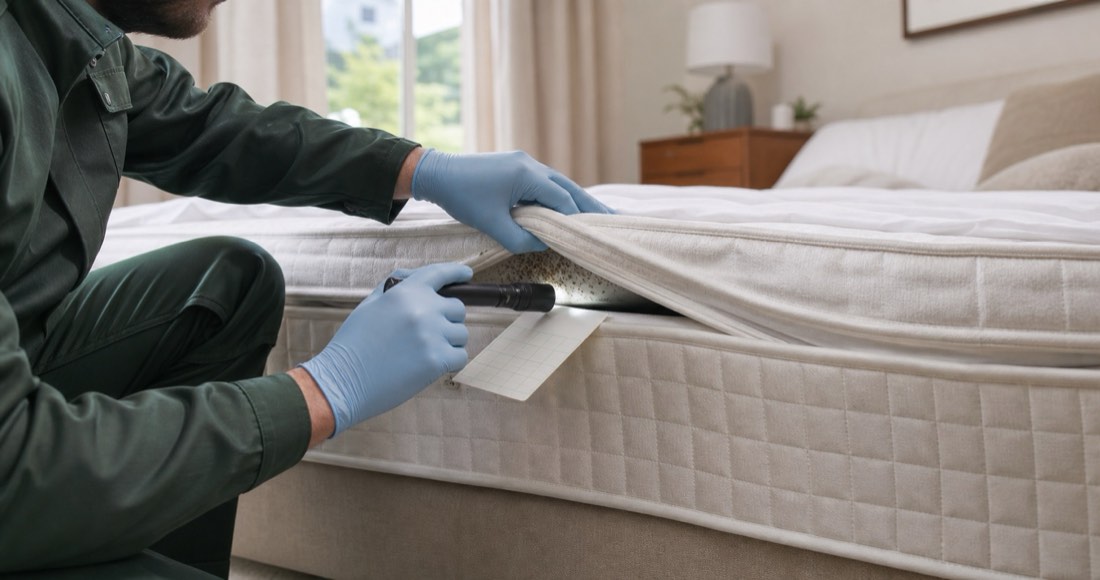
Keep a simple log with the date, the room, the exact spot and the type of sign. Photograph a find where you see it, and keep a specimen. Check monitors at set times. Do not keep taking the bed apart.
Bite marks can appear or last for reasons that do not prove live bugs remain. Follow NHS advice for the skin. Meanwhile, the follow-up visit judges the home.
Cleaning and vacuuming
Follow the written steps for your method, since heat jobs and residual insecticide plans may have different cleaning rules. If vacuuming is allowed, empty the machine as told. Do not carry the contents through the home.
At the follow-up visit
Bring your log, specimen or photos, so the firm can compare them.
Ask the firm to compare what it finds now with the first map. Then discuss why signs continue, if they do. The cause could be an untreated hiding spot or weak prep. It could also be new bugs or another pest.
If signs persist, read our guide on treatment that is not working. It explains how to escalate with a clear record.
Related guides and local help
Aftercare often raises questions on methods and cost. Our guide to steam treatment covers one option. For repeat problems, see insecticide resistance. You can also check what treatment costs if you need more work.
If you want help, you can ask for help and we will pass your enquiry to a UK pest control company that covers your area. We may receive a fee for this. The company is an independent business.
Local routes differ across the UK. Read about bed bug help in Manchester and bed bug help in Bradford for council details. For another example, see council pest control in Southampton.
However, GOV.UK’s council finder covers England and Wales only. In Scotland and Northern Ireland, check your council or the Northern Ireland Housing Executive directly.
Questions people also ask
Can I sleep in the room after treatment?
Follow the provider's re-entry and occupancy instructions for your method. Do not swap them for a general time you found online.
Does one bite after treatment mean failure?
No. A skin mark cannot confirm ongoing bed bug activity. Record it and look for physical evidence. Then use the scheduled follow-up to assess the whole picture.
Sources and review notes
This page is written by the BedbugExtermination.co.uk editorial team. It has not yet been reviewed by an independently named pest-control professional. Health and pesticide statements are kept within the scope of the official sources below.
- Using biocides safely
Health and Safety Executive - Bedbugs
NHS