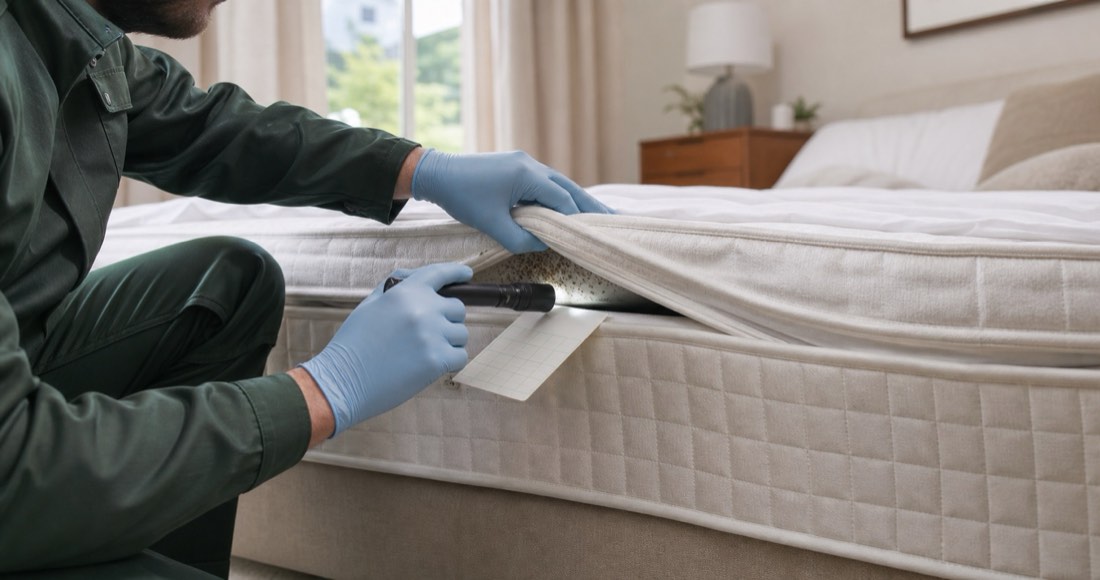
- Prepare a torch, white card, sealable container and phone camera.
- Inspect from the sleeping position outwards in a fixed sequence.
- Do not dismantle more than you can reassemble safely.
- Photograph the original location of evidence.
- If you find signs, or the check leaves you unsure, book a professional inspection.
How to check your bed for bed bugs: the short version
To check your bed for bed bugs, strip it down and search the seams, piping, labels, frame joints and headboard with a torch. The NHS says adults are about 5mm long, so a careful search can find them. It lists blood spots on bedding and small brown spots on bedding or furniture as signs. A clear sighting beats any single mark, so take your time and follow the steps below.
What to gather before you start
Use a bright torch, a stiff white card, a clear lidded container or sealable bag, and a phone camera. A screwdriver may help with a removable headboard or a simple bed fitting. However, do not dismantle electrical items or furniture you cannot put back safely.
Keep a bin bag for ordinary rubbish. However, do not use it to carry possibly affected textiles around the home. Wear gloves if you prefer, and wash your hands afterwards. This check is part of our wider guide to identifying bed bugs.
The ten-step inspection
- Record the starting condition. Photograph the bed and note where people usually sleep.
- Remove pillows and the duvet slowly. Look at the folds. If treatment is likely, place them in a clean container or bag.
- Check the sheet. Look for blood spots, dark marks or a captured insect. Each can have another cause.
- Follow the mattress piping. Use the torch and white card along the whole seam, not one corner.
- Inspect labels, handles and tufts. These create protected edges.
- Check the underside edge. Get help to lift a heavy mattress, and avoid trapping fingers.
- Inspect the base or frame. Concentrate on joints, screw holes, slats and fabric staples.
- Examine the headboard. Look behind it if you can remove it safely, and do not tear fixed wall finishes.
- Move to bedside furniture. Inspect joints and the undersides of drawers closest to the bed.
- Check the immediate perimeter. Look along skirting, carpet edges, picture backs and loose wallpaper near the bed.
How to judge a finding
A clear live specimen is more useful than a blurry photograph of an isolated mark. Dark spotting in a protected bed-frame joint says more than a single mark in the middle of a wall. In addition, repeated evidence in connected hiding places strengthens the picture.
The NHS identifies mattresses, bed frames, clothing, furniture, picture backs and loose wallpaper as possible hiding places. A good check goes beyond the top of the mattress, but it should not become a destructive search of the whole property.
Because you may travel, the same method works in rooms away from home. See our advice on bed bugs in hotels for the extra steps to take there. A pest professional may also use detection dogs and monitors when a visual check is not enough.
What not to do during inspection
Do not move to a different bedroom just to escape suspected activity, and do not carry an uncovered mattress through shared halls. Also, do not apply household insecticide in sockets, on bedding or on skin. Never mix products or use more than the label allows.
Worry about bites can keep you awake, so you are not alone. Our page on sleep and anxiety offers practical ways to cope while you investigate. Many people also ask whether a mattress encasement can help. Read that guide before you buy one.
DIY check vs a professional bed bug inspection
A home check is a good first step because it costs nothing. However, it has limits. Bed bugs hide in tight gaps, and a bed bug check by eye can miss them. Marks on sheets can also have other causes.
A professional bed bug inspection goes further. A pest controller searches the bed, nearby furniture and room edges, and can tell you what the signs are. They can also show which rooms are affected, which a home check often cannot. Our guide to professional bed bug treatment explains what a good service should cover.
Book an inspection when:
- you find live bugs, shed skins or dark spots in several places
- you have bites but find nothing, and the doubt is keeping you awake
- you have checked once and still cannot tell what the marks are
- you rent, and need written evidence to show your landlord
The NHS advises contacting your local council or a pest control service, because bed bugs are hard to remove yourself. Councils may charge a fee, according to GOV.UK. Ask any firm what the inspection covers before you agree.
This site is an independent guide. We do not treat homes ourselves. If you want help, our request help form passes your enquiry to a UK pest control company that covers your area. That company is an independent business, and we may receive a fee for the referral.
Detection aids: interceptor traps
Interceptors are dishes under the legs of a bed, and bugs that climb the leg fall in. They can catch bed bugs as they move between the bed and the room. Check and empty them often, and keep bedding off the floor so bugs cannot cross it.
Treat an interceptor as a monitor, not a test. An empty dish does not prove the bed is clear. For more on how they work, read our guide to mattress encasements and interceptors.
After you find convincing evidence
Pause before you deep clean, because a professional can learn from where the signs cluster. Contact your local council to ask what it offers, or arrange an assessment with a pest controller. GOV.UK says its council pest-control finder is available in England and Wales only. In Scotland and Northern Ireland, check with your council or the Northern Ireland Housing Executive directly.
Since follow-up matters, read what to do after treatment so you know what follow-up to expect. If you rent, the guide to bed bugs and renting explains who to tell. For local help, see council pest control in Nottingham, council pest control in Belfast, or bed bug help in Birmingham.
Questions people also ask
How do I check for bed bugs at home?
Work from the bed outwards with a torch and a white card. Check mattress seams, labels, frame joints, the headboard and nearby furniture. Look for live insects, dark spots, shed skins and blood marks, and photograph anything you find.
What does a bed bug inspection involve?
A professional searches the bed, nearby furniture and room edges for live bugs and other signs. They can confirm what you found and show which rooms are affected. The scope and cost vary by firm, so ask what the visit covers before you book.
Can I inspect a bed bug problem during the day?
Yes. Bed bugs hide in protected gaps, so a torch and a systematic search matter more than waiting for darkness. Do not rely on a brief look across the open mattress surface.
Should I throw away the mattress if I find signs?
Not automatically. Disposal can spread the problem and may be unnecessary. Ask how the mattress fits into the treatment plan before you move it through the property.
What should I do with a suspected insect?
Capture it intact in a clear lidded container or sealed bag. Note where and when you found it, and use it for professional identification.
Sources and review notes
This page is written by the BedbugExtermination.co.uk editorial team. It has not yet been reviewed by an independently named pest-control professional. Health and pesticide statements are kept within the scope of the official sources below.
- Bedbugs
NHS - Pest control on your property
GOV.UK