- The provider's method-specific list overrides a generic checklist.
- Contain textiles before moving them through the home.
- Do not relocate clutter into an untreated refuge.
- Tell the provider about pets, children, health concerns and sensitive items.
Good prep helps treatment work. Poor prep can spread the problem. This guide sits within our bed bug treatment overview. Use it alongside your firm’s own list.
Get the right checklist first
Prep is part of the plan. A heat job may need air flow and the removal of items that dislike heat. An insecticide job may need access to edges and rules on cleaning treated surfaces. A generic web list cannot cover both without clashes.
Ask for the checklist before the visit and read it all. Query anything you cannot do. The firm should also know about disability, limited mobility, pregnancy and breathing problems. Pets, fish tanks and vital medicines matter too, since they affect safe access and product use.
Keep the signs for the inspection
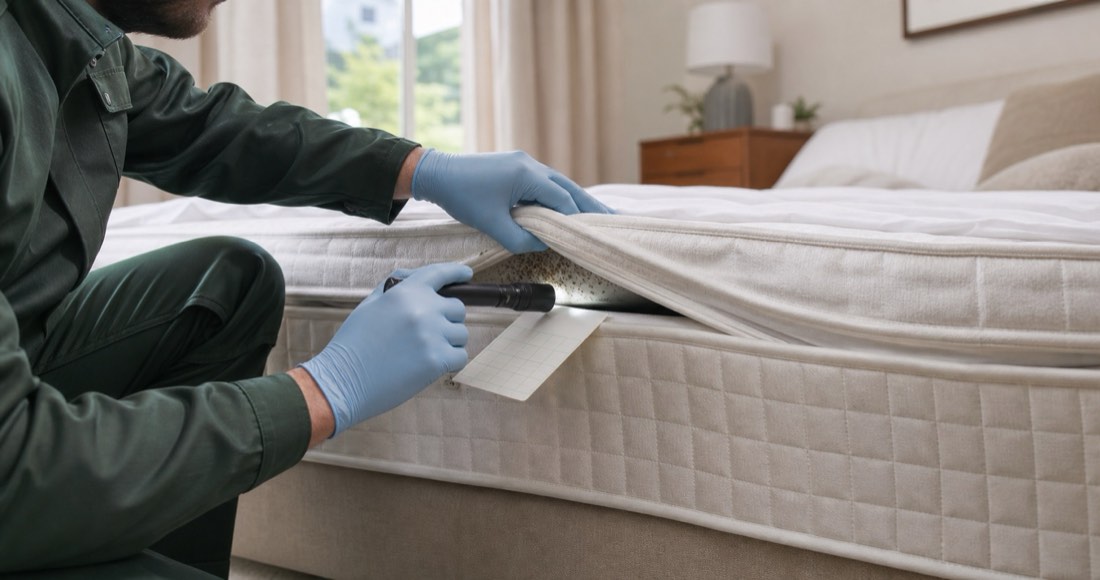
If nobody has inspected yet, photograph key signs before you clean. Keep any bugs you catch. Do not take the room apart or drag furniture into another area.
Knowing the signs helps you record them. Our guide to the early signs of bed bugs shows what to look for. In addition, learn where bed bugs hide so you can point the technician to the right spots.
Laundry and fabrics
The NHS says to wash affected bedding and clothes at 60°C and tumble dry on hot for at least 30 minutes. Still, check each care label and your plan. Bag items before you move them. Put clean items in sealed storage and label them, so they stay apart from the rest. Our guide to clothes and laundry gives more detail.
The NHS also says you can seal items that cannot be washed in a plastic bag and put them in a freezer for two to three weeks. Freezers and fabrics differ. Use the current NHS wording, and do not cut the time short because of an unofficial source.
Furniture and room access
Clear safe access around the bed, the skirting and any furniture in the plan. Do not lean a mattress against a shared wall. Do not carry it uncovered through shared halls. Ask if the firm can treat it before you bin it. A mattress encasement may help in some cases.
Cut floor clutter by putting items in labelled boxes, as the firm says. “Declutter” should not mean scattering bags around the building.
Special situations
Children, travel and shared housing all raise extra questions. Read about bed bugs and children if young people sleep in the room. If you commute, our guide to bed bugs on public transport explains how to avoid carrying them home. Renters should also read about bed bugs in rented homes before work starts.
Local routes vary, so see bed bug help in Bradford and bed bug help in Southampton for council details. Our page on bed bug help in Plymouth adds another example.
Heat and chemical limits
For heat, ask about aerosols, batteries, medicines, plants, candles, instruments, electronics and fine finishes. For insecticide work, ask what to cover or move. Ask which surfaces the firm cannot treat and when you can go back in.
Final check before the visit
- Confirm the arrival window and how the team will get in.
- Keep prep photos if useful.
- Keep clean and untouched fabrics apart.
- Secure pets exactly as told.
- Note any alarms, sprinklers or building systems.
- Do not add foggers, sprays or powders to the firm’s plan.
- Keep the written aftercare notes.
Questions people also ask
Should I wash every item before treatment?
Not automatically. Prioritise the items named in the treatment plan and keep cleaned items apart from untreated material. Unnecessary movement can make control harder.
Should I vacuum before the technician arrives?
Ask the provider. Vacuuming may help, but removing all visible evidence before inspection can make mapping harder.
Can I leave belongings in drawers?
That depends on the method and the furniture. Use the written instructions. Do not assume every drawer should be emptied into bags or another room.
Sources and review notes
This page is written by the BedbugExtermination.co.uk editorial team. It has not yet been reviewed by an independently named pest-control professional. Health and pesticide statements are kept within the scope of the official sources below.
- Bedbugs
NHS - Using biocides safely
Health and Safety Executive