- Bites can support a suspicion but cannot identify the cause on their own.
- Physical evidence is often concentrated close to where people rest.
- Photograph or contain a specimen before you disturb the room.
- Bed bugs can occur in clean homes as well as cluttered ones.
Start with evidence, not the most frightening explanation
Bed bug worries often begin after someone wakes with an itchy mark. That is understandable. However, a skin reaction does not tell you which insect caused it, or whether an insect caused it at all. People react differently, marks can appear after a delay, and other pests or skin conditions can look similar.
The more useful question is: what physical evidence is present in the sleeping area? A methodical inspection gives a pest controller something to act on. It also reduces the risk of treating the wrong problem. Our guide to the early signs of bed bugs shows what to look for first.
The evidence hierarchy
The strongest finding is a live insect, or a well-preserved specimen that someone competent has identified. Other useful signs include groups of dark brown or black spots near hiding places, shed skins, eggs in protected crevices and blood spots on bedding. Do not rely on any one of these alone when the finding is unclear, since many have other causes.
The NHS bedbug page lists bites, blood spots and small brown spots on bedding or furniture among common signs. It also says bed bugs can hide in bed frames, mattresses, clothing, furniture, behind pictures and under loose wallpaper.
What an adult bed bug looks like
An unfed adult is broadly oval, flattened and brown. After feeding, the body looks fuller and darker. Young stages are smaller and paler, so they are harder to see on light fabrics. Bed bugs have no wings for flight, and they cannot jump like fleas.
Size and colour descriptions help with screening. However, do not force every tiny brown insect into the same answer. Carpet beetles, booklice, fleas and small beetles are common sources of confusion.
Inspect the places that offer cover
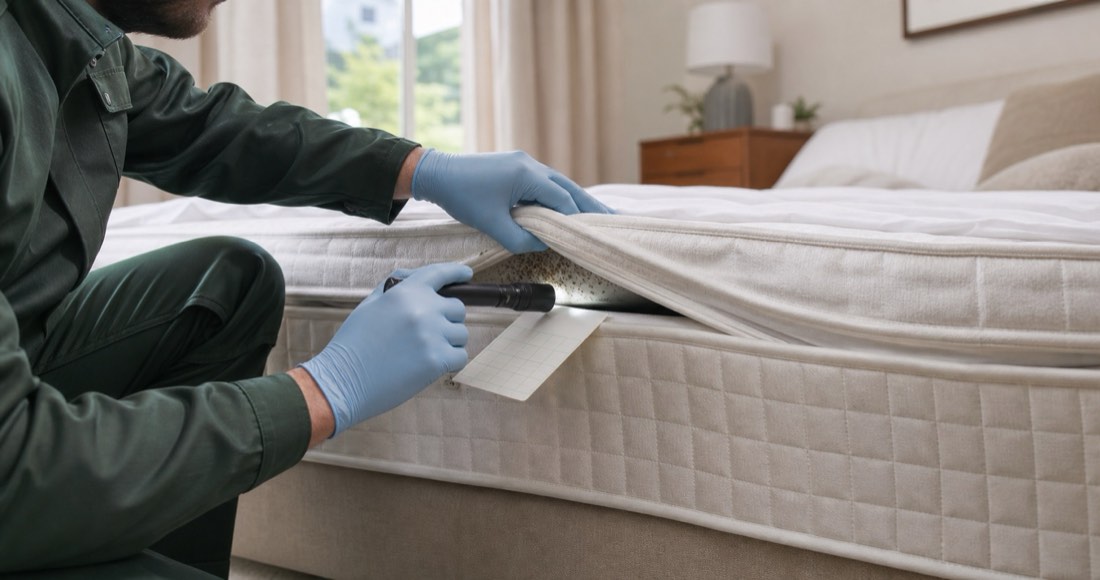
Begin at the bed and work outwards. Look along piping, labels and tufts on the mattress. Then examine screw holes, slats, joints and the back of the headboard. Check bedside furniture, upholstered seams and the edges of nearby flooring.
Use a bright torch, a white card and a clear lidded container. Photograph the evidence before you clean it. If you capture a suspected insect, do not crush it, because its shape is far more useful intact. Because the order matters, our step-by-step bed check walks you through the full sequence.
When to move from checking to treatment
If you find convincing evidence, work out how far the activity extends before you decide on a plan. Do not throw the bed away at once, because moving furniture or sleeping in another room can make control harder, so read the bite guidance if skin symptoms are worrying you.
Next, ask your council whether it offers a service, or book an assessment with a professional pest controller. GOV.UK lists both options in its property pest-control guidance. Its council pest-control finder covers England and Wales only. In Scotland and Northern Ireland, check with your council or the Northern Ireland Housing Executive directly.
If you find no physical evidence, keep a dated inspection record and repeat a focused check. Do not apply insecticide “just in case”. A monitor or interception trap may help, but you need to place and read it correctly.
Local routes to help in the biggest cities
Council services differ from place to place, so check your own area first. Each city page sets out what that council says about bed bugs, with the date we checked it. It also explains the renting rules for that nation and what to do first.
In England, see council pest control in London, bed bug help in Birmingham and what the Manchester council offers for bed bugs. Scotland, Wales and Northern Ireland have their own rules, so use council pest control in Glasgow, bed bug help in Cardiff or council pest control in Belfast as your starting point.
Every guide in identify bed bugs
- Bed bug bites: signs, limits and when to seek helpBites can be itchy and grouped, but the skin cannot identify the insect. Treat the skin and check the room for physical evidence as two separate jobs.
- Bed bugs or fleas? How to compare the evidenceA practical comparison of what to inspect around beds, pet resting areas, carpets and furniture when itchy marks could have more than one cause.
- Early signs of bed bugs and what to check firstThe first useful signs are usually small, local and found near a regular sleeping place, not a dramatic whole-room infestation.
- How long can bed bugs live without feeding?Bed bugs can survive from weeks to many months without feeding, depending on temperature. Here is what that means for empty rooms and starving them out.
- How to check your bed for bed bugs in 10 stepsA room-by-room inspection sequence using a torch, white card, clear container and a simple evidence record.
- The bed bug life cycle: eggs, nymphs and adultsBed bugs pass through an egg, five nymph stages and adulthood. Here is how long it takes, what each stage needs and why timing matters.
- What attracts bed bugs? Separating myths from evidenceBed bugs are drawn to people and animals, not to dirt. This guide sorts the evidence on heat, carbon dioxide, fabric and clutter from the common myths.
- What bed bug eggs look like and where they are foundEggs are small, pale and easily confused with lint or debris. Context and accompanying evidence matter more than one isolated speck.
- Where bed bugs hide in bedrooms and furnitureA practical map of the top hiding places, how the pattern can spread and why searching a whole room at random wastes time.
Questions people also ask
Can you identify bed bugs from bites?
No. Bite appearance and reactions vary, and several other causes can produce itchy marks. Use bites as a reason to inspect, not as proof of which insect is involved.
Are bed bugs always found in the mattress?
No. They may hide in bed frames, headboards, nearby furniture, clothing, behind pictures or under loose wallpaper. This is more likely once an infestation has spread.
Does a clean room rule out bed bugs?
No. Cleaning makes inspection easier, but bed bugs follow access to a host. They do not follow household cleanliness.
Sources and review notes
This page is written by the BedbugExtermination.co.uk editorial team. It has not yet been reviewed by an independently named pest-control professional. Health and pesticide statements are kept within the scope of the official sources below.
- Bedbugs
NHS - Pest control on your property
GOV.UK