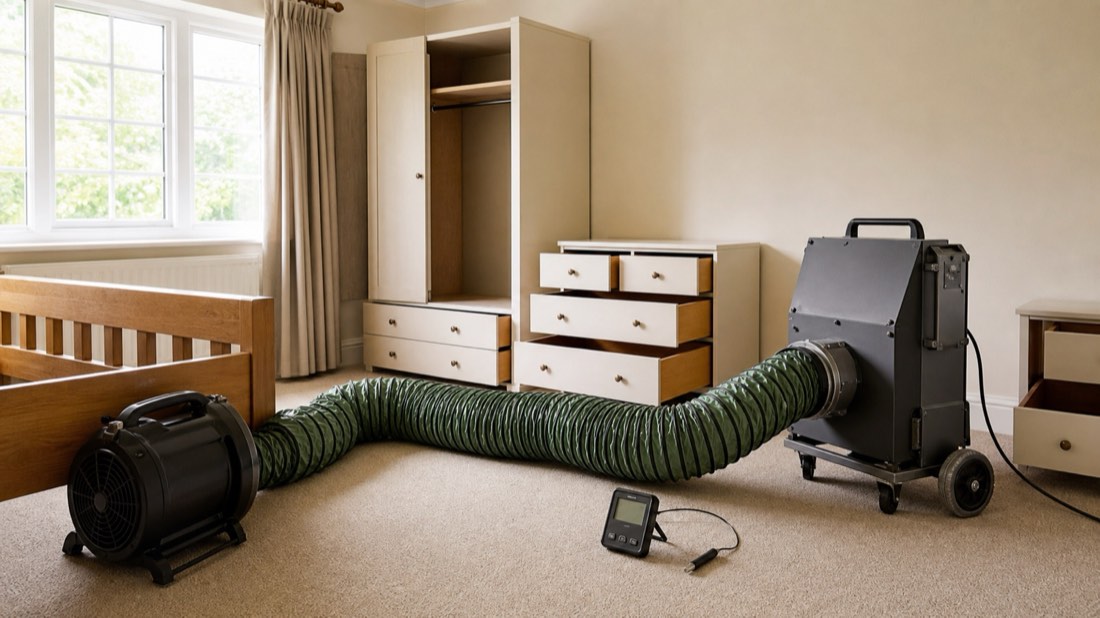
- Room air temperature alone does not prove every hiding place received the planned exposure.
- Sensors, air movement and technician checks deal with cold spots.
- Sensitive belongings need a clear decision to remove, protect or treat them.
- Follow-up and the risk of reinfestation still need discussion.
Bed bug heat treatment means warming a room, or part of a home, with specialist heaters so the heat reaches where bugs hide. This guide explains how professionals run it, what it can cost and whether bed bug heaters are a job for you. It also lists what to ask before you agree.
Heat is a process, not just a heater
A good service needs more than hot-air kit in a room. Furniture, walls, floor edges and packed items all warm at different speeds. The team has to manage those gaps. That way, the planned heat reaches the hard spots without damaging your home.
Technicians use heater power, air movers, placement and temperature probes to control the job. Ask whether the sensors read more than the easy air temperature. Ask what the team does when a spot warms slowly, because slow spots are where the planned heat may fall short.
Define the treatment boundary
Will the team treat one room, linked rooms, the whole flat or chosen contents? What evidence backs that choice? Heat cannot reach a hiding place outside the treated area, however strong the kit is inside it.
In flats, shared walls and moving between rooms make the boundary even more important. That does not mean every neighbour has bed bugs. It does mean the provider should explain their risk check.
Local routes differ too, so see our pages on council help in Manchester and bed bug help in Plymouth. For a large city example, read about council pest control in London.
How professional bed bug heat treatment works
Most jobs follow the same broad steps. The exact plan is the firm’s to set, so ask for it in writing.
- Inspection. The technician finds where the bugs are and decides what to treat.
- Preparation. You follow a written list, and the team protects heat-sensitive items.
- Heating. Heaters and air movers warm the treated area.
- Monitoring. Probes in chosen spots show whether the planned exposure is reached, including slow-warming places.
- Holding and cooling. The team keeps the heat going for the planned time, then lets the space cool safely.
- Follow-up. A check shows whether any bugs remain or new ones have arrived.
HSE says extreme heat “may be effective in some circumstances” as a non-chemical option. That is why the monitoring step matters. It is the evidence that the heat did its job in the hard places, not just in the room’s air.
If you want a firm to cover your area, you can ask for help. This site is an independent guide. It does not treat homes itself.
Instead, it passes enquiries to a UK pest control company that covers your area, and it may receive a fee. That firm is an independent business.
How much does bed bug heat treatment cost in the UK?
No national price exists. In October 2026 we checked council fee pages, including Haringey and Test Valley. Both list a bed bug charge by property size and number of visits.
However, they do not list a heat-treatment price. For example, Haringey lists £360 for up to three rooms, with two visits.
In contrast, private heat quotes vary with the size of the job, the preparation and the follow-up. Compare the written scope, not the headline number. Our bed bug treatment cost guide shows the council figures we checked and how to compare quotes.
Bed bug heaters: can you do it yourself?
In short, this is usually not a good idea. The NHS says there are things you can try yourself, but they are unlikely to get rid of bed bugs completely. It also says bed bugs can be hard to find. A heater can only act on bugs it reaches, and you cannot be sure it reaches bugs you have not found.
However, safety matters too. GOV.UK fire safety advice for portable heaters says to keep them clear of curtains and furniture and never to use them to dry clothes.
It also says to secure heaters against a wall so they cannot fall over. It advises you to turn heaters off and unplug appliances when you go to bed. A heater left running for hours in a room full of bags and bedding goes against that advice.
So if you want to use heat yourself, keep to laundry. The NHS advises washing bedding and clothes hot and drying them on high heat. Our guide to washing clothes and bedding explains how. For whole-room heat, ask a professional.
Preparation should protect the plan
First, preparation may mean removing aerosols, pressurised cans, heat-sensitive medicines, plants, waxes or some electronics. The provider should give you a written list of items. Moving every bag to an untreated room can create a safe refuge for bugs. So confirm whether each item should stay, go in a sealed bag, get separate treatment or leave the home.
Thin out dense piles so air can flow. However, do not take apart or throw away furniture unless told to. Keep skirting, frames and cupboards easy to reach. Tell the provider about sprinklers, alarms, delicate finishes or areas that do not heat normally.
What happens on the day
After setup, the team should watch the property. They should never leave the kit running alone.
Meanwhile, air movers spread the heat, while probes check chosen points. The team may also move belongings if the plan needs it. Access rules still apply throughout.
After heat treatment
You should get clear steps on cooling, re-entry, laundry and monitoring. Ask whether the team used a residual product. If so, find out what it was and where it went. Do not deep-clean that area until you know how it affects the plan.
Heat cannot stop a new arrival from luggage, furniture or a linked area it missed. So the follow-up should tell a failed job from a fresh arrival. A broad promise is not enough.
How heat compares with other methods
Heat is one of several options, so weigh it up. Our guide to chemical bed bug treatment explains the product side. Our advice on shop-bought home products covers what you can safely try yourself. Some providers mix heat with residual products, so compare quotes with care.
Our guide to choosing a pest controller lists what to ask.
Aftercare, sleep and worry
Follow the provider’s aftercare steps, as our guide to what to do after treatment explains. Meanwhile, if you are not sleeping well, see our guide to sleep and anxiety after bed bugs. If you doubt what you found, our guide to bed bugs versus fleas can help. For the wider picture, see our bed bug treatment overview.
Questions people also ask
How long does heat treatment take?
The duration depends on the property, the equipment, the contents and the treatment plan. Ask for the expected heating, holding and cooling stages for your job. Do not rely on a universal number.
Does heat treatment use chemicals?
The heat process itself is physical. However, some providers combine it with monitoring, residual products or other controls. The quote should list exactly what you get.
Can I use a bed bug heater to treat my home myself?
The NHS says self-treatment is unlikely to get rid of bed bugs completely, partly because they are hard to find. A heater cannot treat bugs you have not found. Portable heaters also carry a fire risk, so follow GOV.UK fire safety advice and ask a professional about heat.
How much does bed bug heat treatment cost in the UK?
There is no single price. The council fee pages we checked in October 2026 list bed bug charges by property size and number of visits, with no separate heat price. In contrast, private heat quotes vary, so compare written scopes. Our cost guide has the council figures.
Can electronics stay in the room?
That depends on the planned temperature, the equipment and the manufacturer's limits. Use the provider's item-by-item preparation list. Do not move belongings without agreement.
Sources and review notes
This page is written by the BedbugExtermination.co.uk editorial team. It has not yet been reviewed by an independently named pest-control professional. Health and pesticide statements are kept within the scope of the official sources below.
- Fire safety in the home
GOV.UK - Pest control fees
Haringey Council - Pest Control Charges
Test Valley Borough Council - Bedbugs
NHS - Using biocides safely
Health and Safety Executive