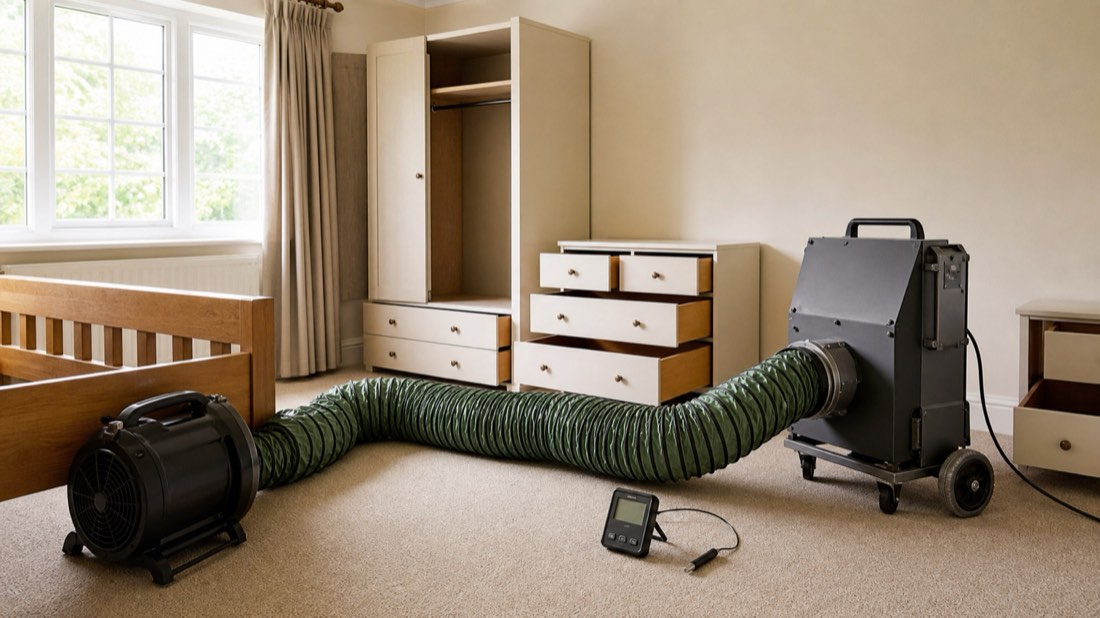
- The NHS says home measures are unlikely to remove bed bugs completely.
- Only use products authorised for your use, and use them only as the label says.
- Foggers do not reach the cracks where bed bugs hide.
- Never use petrol, kerosene or rubbing alcohol on a bed bug problem.
Why people reach for home products
Finding bed bugs is stressful, so a spray from the shop feels like action. That is understandable. The risk is that the wrong product, used the wrong way, makes things worse. It can also delay proper help while the bugs spread.
The NHS says it is very difficult to get rid of bed bugs yourself. They are hard to find, and some resist insecticides. It adds that home measures are unlikely to remove them completely. Keep that in mind as you read on.
What the law and the label say
In the UK, the law treats pest products as biocides. The Health and Safety Executive (HSE) says you should only buy products on the UK list of authorised biocidal products. You can spot them by an authorisation number on the label.
The HSE also gives these rules for home users:
- Buy products labelled for use by the general public.
- Check what the product is authorised for. You cannot use a biocide for a different purpose.
- Follow the label instructions carefully.
- Keep products in their original containers, locked away from children.
- Do not mix products.
- Check the label or your local waste authority for how to dispose of leftovers.
If you feel unwell after using a product, get medical advice. Keep the label to hand, as it shows the active ingredient.
Sprays
However, a spray only works where it lands. Bed bugs hide in seams, joints, cracks and behind skirting, so a quick spray over the mattress misses most of them. The NHS also says bed bugs may be resistant to some insecticides. You can read more in our insecticide resistance guide.
Check that bed bugs are named on the label. If a product does not list bed bugs, the label does not cover that job, and the HSE says you must not use a biocide for anything else.
Foggers and bug bombs
Foggers fill a room with mist. They look thorough, but bed bugs hide in cracks, seams and behind skirting boards. Hastings Borough Council also warns that amateur products can send bed bugs into other rooms. Use a fogger only if the label names bed bugs.
Follow the label on ventilation, re-entry and how many to use.
Powders
For example, shops sell some home powders for crawling insects. Apply any powder exactly as the label says, and keep it away from bedding and from children and pets.
However, the label on a pool or food-grade powder does not name bed bugs. The HSE says you must not use a biocide for any purpose its label does not state. If you choose a powder, pick one authorised for the purpose and read every warning.
Things you should never do
Therefore, do not use petrol, kerosene or rubbing alcohol. No label authorises them for bed bugs, and fuels are a fire risk. Use a product only for what its label authorises, and do not mix products.
While heat and cold at home are safer than chemicals, they have limits too. The NHS suggests washing items at 60C and tumble drying for at least 30 minutes, or freezing non-washable items for two to three weeks. See our clothes and laundry guide for how to do this.
Keeping people and pets safe
Safety comes first, so read before you buy. The HSE says to keep biocides away from children and to store them in their original containers. Lock them away, and never decant a product into a drinks bottle.
Therefore, read the label for who may use the product and where. Some products are only for trained users. If the label says to leave the room for a set time, do exactly that. Follow any label advice about pets and about when people can return to a treated room.
As a precaution, if anyone feels unwell after you use a product, get medical advice and take the label with you. The HSE says the authorisation number and active substances help with reporting an incident.
Check the claims on the packaging
Because packaging can promise a lot, look closely. Look past the slogans and find the boring details. Is bed bug listed as a target pest? Is there an authorisation number? Does the label say it is for home use? If the answer to any of these is no, leave the product on the shelf.
The HSE says authorised products carry an authorisation number, so a product without one is a warning sign.
Prepare before anything else
Whatever you choose, preparation matters, so start early. Declutter, bag laundry, and lift the bed away from the wall. A tidy room is easier to inspect and treat. Our preparation guide has a full checklist. A sealed cover can also help, as our guide to mattress encasements describes.
When home products are not enough
If a product has not worked, do not simply try another. Stacking products can be unsafe, since the HSE says not to mix them. Stop, write down what you used and when, and share this with whoever helps you next.
Ask for help if you still see live bugs after a week or two, or if bites continue. You may need professional treatment. If you have already treated the room, read what to do when treatment is not working.
Cost is a common worry. We explain what affects price in our bed bug treatment cost guide. Councils may offer a service, but charges differ. You can see how this works in practice with council pest control in Nottingham and council pest control in Newcastle upon Tyne. Another example is bed bug help in Cardiff. For the full picture of options, visit the bed bug treatment hub.
Questions people also ask
Do bed bug sprays from shops work?
They may kill bugs that the spray touches, but bed bugs hide in cracks that sprays rarely reach. The NHS says home measures are unlikely to get rid of bed bugs completely, so treat a spray as a short-term aid at best.
Is it safe to use a fogger or bug bomb?
Be very careful. The HSE says a biocide must only be used for the purpose on its label, so a fogger should name bed bugs. Hastings Borough Council also warns that amateur products can send bed bugs into other rooms.
What does the number on a pest product label mean?
The UK Health and Safety Executive says authorised biocides carry an authorisation number on the label. The label also states what the product may be used for and who may use it. If you cannot find these details, do not use the product.
Can I use diatomaceous earth?
Be cautious. A powder sold for pools or food use is not labelled for bed bugs. The HSE says a biocide must not be used for any other purpose than its label states, so choose only a product authorised for the job and follow the label.
Sources and review notes
This page is written by the BedbugExtermination.co.uk editorial team. It has not yet been reviewed by an independently named pest-control professional. Health and pesticide statements are kept within the scope of the official sources below.
- Using biocides safely
Health and Safety Executive - Bedbugs: getting rid of them
NHS - Pest control: bed bugs
Hastings Borough Council