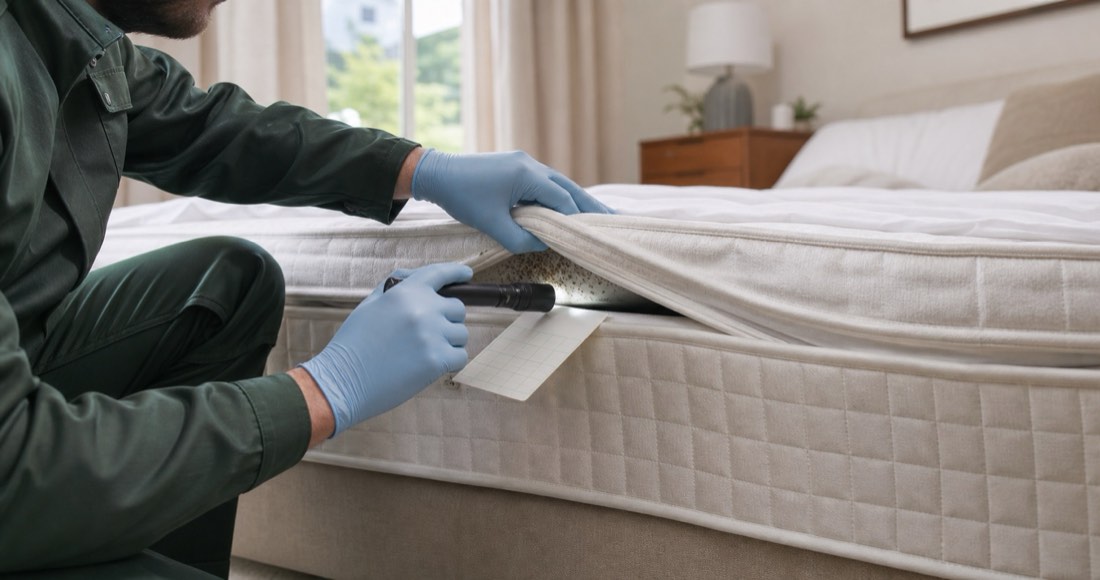
- Early evidence is often close to a regular sleeping position.
- One uncertain mark is a reason to inspect, not a diagnosis.
- Use dates and photographs to tell a pattern from a one-off finding.
Why early signs are easy to miss
Bed bugs spend much of their time hidden in narrow gaps. At a low level of activity, the evidence may sit around one bed-frame joint or a short stretch of mattress piping. It is easy to wipe away a spot or bin a small insect. However, it is just as easy to assume an itchy mark has one obvious cause.
Early detection is therefore less about spotting a dramatic photograph. Instead, look for a combination of place, pattern and repeat evidence. Our guide to identifying bed bugs gives the wider picture.
Signs worth recording
Look for small dark spotting on surfaces near sleeping areas. Also look for pale shed skins in crevices, eggs fixed in protected spots and live insects. A blood spot on a sheet may be relevant, but it can have other causes. Photograph each item with a coin or ruler for scale. Then record the room, position and date.
The NHS lists bites, blood spots and small brown spots on bedding or furniture as common signs. It also notes that bed bugs are found in both clean and dirty places, so the state of the home does not rule them in or out. Our page on what attracts bed bugs explains why.
If you find a pale speck, see what bed bug eggs look like before you decide what it is. The bed bug life cycle also shows why signs from different stages can appear together.
Treat bite patterns cautiously
Online descriptions often give neat rules about bites forming a line or a group. However, real reactions are less tidy. Some people develop raised, itchy marks, some have swelling and some notice nothing. The same room can therefore give different people different experiences.
If a bite is very painful, swollen or itchy despite pharmacy treatment, follow the advice on the NHS bedbug page. Do the same if pain and swelling are spreading. Our guide to bed bug bites covers the limits of skin evidence in more detail.
A focused first check
Remove bedding carefully and examine the mattress edge nearest the usual sleeping position. Continue through labels, tufts and the underside edge. Then check the bed-frame joints and headboard. Move to bedside furniture only after you finish the bed. This order shows you where the evidence clusters.
Do not spray an unidentified mark. Also, do not carry the mattress into another room, because that can spread the problem. If you find a possible specimen, keep it in a clear container or sealed bag for identification. For the full sequence, follow our ten-step bed check.
If the first inspection finds nothing
One ten-minute check does not prove the bed is clear, especially when activity is low. Repeat the same check after several days. Keep clutter away from the bed, and consider a correctly placed monitor. If reactions continue or your worry stays high, a professional inspection is a more sensible step than repeated DIY chemical use.
Bed bugs can go a long time between meals, so a quiet week proves little. See how long bed bugs can live without feeding for the details. To check what your own council says, read about bed bug help in Birmingham, council pest control in Swansea, or bed bug help in Edinburgh.
Questions people also ask
What is usually the first sign of bed bugs?
There is no universal first sign. Some people notice a skin reaction, while others find a live insect, dark spotting or a blood mark while cleaning. Physical evidence is more useful than bite appearance alone.
Can a single bed bug mean an infestation?
A single confirmed specimen calls for a thorough inspection. It does not show the extent by itself, so record where you found it and seek identification or a professional assessment.
Sources and review notes
This page is written by the BedbugExtermination.co.uk editorial team. It has not yet been reviewed by an independently named pest-control professional. Health and pesticide statements are kept within the scope of the official sources below.
- Bedbugs
NHS