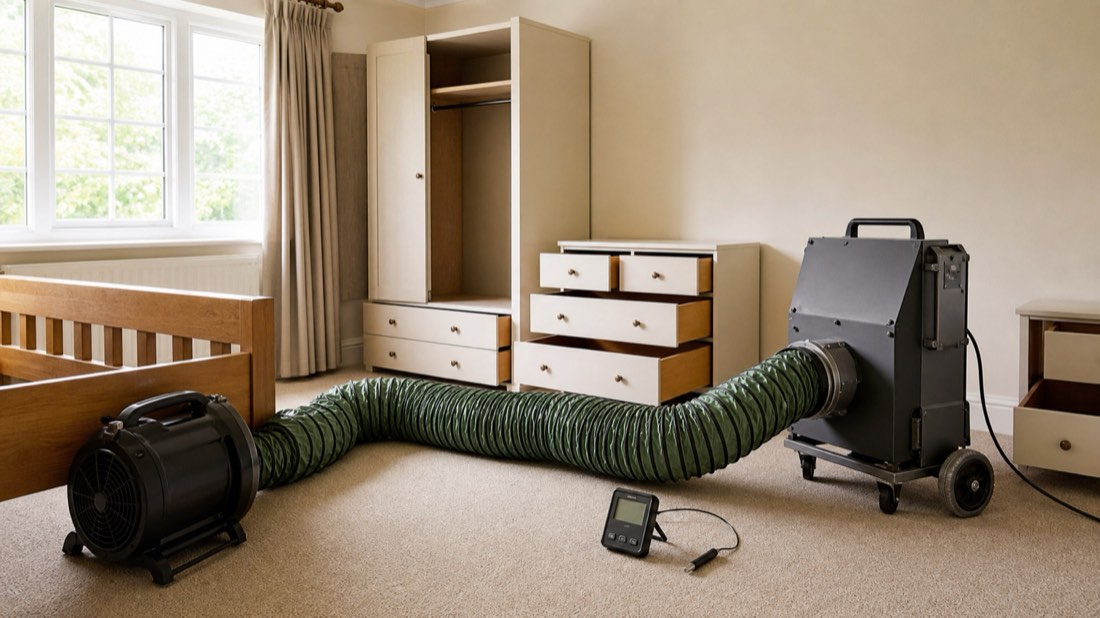
- Use only products authorised and labelled for the intended purpose.
- Never apply room insecticide to skin, bedding or animals unless the label explicitly permits it.
- Resistance and hard-to-reach hiding places can reduce results.
- Follow-up is part of judging whether the programme worked.
What an authorised product means
Biocides are products that the law regulates. They exist to control pests and other harmful organisms. The HSE explains that a product must suit the pest you want to control. You must also use, store and dispose of it the right way.
Buying a bottle online does not remove your duty to read its approved uses and label, because the user carries that duty. Never pour an insecticide into an unlabelled container. Keep it in its original pack and away from children and pets. If it makes a person or animal unwell, get medical or vet advice. Then follow the incident steps on the label.
Where chemical treatment fits
Chemicals are one option among several. Our overview of bed bug treatment methods compares them. Our guides to steam treatment and heat treatment explain two physical options. Many pest controllers mix methods, so ask what your quote includes.
Why placement matters
Bed bugs use narrow, safe gaps. A broad spray on visible surfaces may expose people in the room without reaching the main hiding places. A professional places product where the inspection shows bugs. They also follow the product authorisation and the material they treat.
Some products keep working after they dry, while others act in a different way. Do not assume that wiping every treated surface right away helps. Instead, ask which areas to leave alone and for how long.
Resistance and repeat work
The NHS notes that bed bugs may be resistant to some insecticides. This is one reason to avoid using the same household product again and again without advice. A professional plan may mix controls, add monitoring and book a follow-up. It does not just add more product, since extra product adds risk without extra control.
If a first try fails, however, read what professional treatment can cost before you agree to repeat work.
Questions to ask a provider
- What is the product name, and what is its authorisation for this use?
- Which surfaces and hiding places will you treat?
- What must I remove, cover or leave in place?
- What are the re-entry, airing and cleaning rules?
- How do you protect children, pets, pregnancy or breathing problems?
- When will you check the result?
Keep the answers with your service paperwork, since you may need them later.
Special situations
Some homes need extra care. For example, in flats, the plan must allow for shared walls, so read our guide to bed bugs in flats. Homes with animals should see our advice on bed bugs and pets. Shared houses need a plan too, as our page on student accommodation explains.
DIY limits
Never put household products on people or animals unless the label says that use is safe and approved. Do not use farm, vet or outdoor products indoors. Do not spray into electrical fittings. If you feel unsure about the label, the size of the problem or anyone’s safety, a professional visit is the safer step.
Rules and council services vary, so you may find our pages on council help in Newcastle upon Tyne and bed bug help in Southampton useful. You can also see council pest control in Liverpool. For the wider view, return to our bed bug treatment overview.
Questions people also ask
Can I use more product to make it work faster?
No. Using more than the label allows adds risk without better control. Follow the label or the pro's written safety steps.
Can I mix two insecticides?
Do not make your own mixture. Labels and authorisations govern use. A home-made mix can expose people, pets and the environment to needless risk.
Sources and review notes
This page is written by the BedbugExtermination.co.uk editorial team. It has not yet been reviewed by an independently named pest-control professional. Health and pesticide statements are kept within the scope of the official sources below.
- Using biocides safely
Health and Safety Executive - Bedbugs
NHS