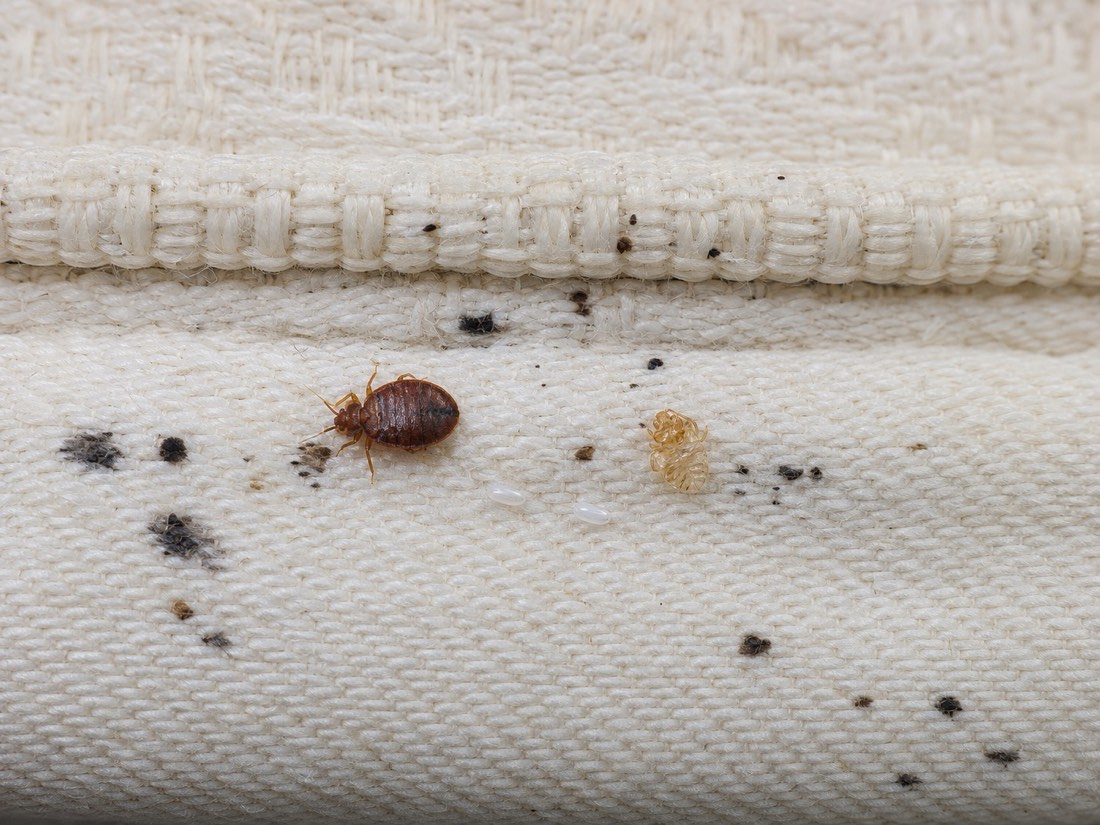
- Bite pattern is not a reliable species test.
- Movement and hiding location give stronger clues.
- Pet treatment and room treatment are different decisions.
Begin with the insect’s behaviour
If a small insect jumps rapidly from a surface, that points away from a bed bug. Bed bugs crawl and look for narrow hiding places. Fleas are more likely where animals, animal bedding, carpets or wildlife access are part of the home.
Behaviour helps only when you actually see it, because a crushed speck cannot show you how it moved. Our guide to identifying bed bugs explains what else to look for.
Compare the room evidence
For suspected bed bugs, inspect mattress seams, bed-frame joints, headboards and nearby furniture. For suspected fleas, also check pet bedding, floor edges, upholstered furniture and the places where animals rest. Do not skip one inspection because the first marks looked like a familiar pattern.
Because bed bugs can arrive on luggage, think about recent trips. If you have been away recently, read about bed bugs after travel. If you suspect an office or shared space, the guide to bed bugs in workplaces explains how to report it.
Keep human and animal care separate
If a pet is scratching, seek veterinary advice. For instance, do not put household insecticide on the animal. If people have worrying skin reactions, follow NHS advice. Products meant for a room, an animal and a person are not interchangeable.
Preserve the specimen
A whole insect in a clear container can settle the question faster than days of online image matching. Record the surface and the room where you caught it. If the result stays uncertain, ask a pest professional, a local service or a suitable identification resource before you spend money on treatment.
A pest controller can confirm what you have, so consider booking one if the result stays unclear. Our guide to professional bed bug treatment explains what a visit involves. Treatment can use heat, so the page on heat treatment covers the questions to ask. Some providers use chemical treatment, so it helps to know how those products are meant to be used.
Why the correct distinction matters
A bed-focused plan will not automatically fix a flea problem linked to animals. Similarly, flea treatment can miss bed-frame hiding places. Getting the pest right protects your household from needless chemical use. It also stops you losing time on the real source.
Bed bugs can travel in vehicles, so the advice on bed bugs in cars may also apply. For local routes to help, see council pest control in Sheffield, bed bug help in Brighton and Hove, or council pest control in Bradford.
Questions people also ask
Can bed bugs jump like fleas?
No. Bed bugs crawl, while fleas have powerful legs built for jumping. Watching how a captured insect moves can therefore help.
Do bites around the ankles always mean fleas?
No. Location can add to the wider picture, but it is not proof. Inspect the room and capture a specimen when you can.
Sources and review notes
This page is written by the BedbugExtermination.co.uk editorial team. It has not yet been reviewed by an independently named pest-control professional. Health and pesticide statements are kept within the scope of the official sources below.
- Bedbugs
NHS