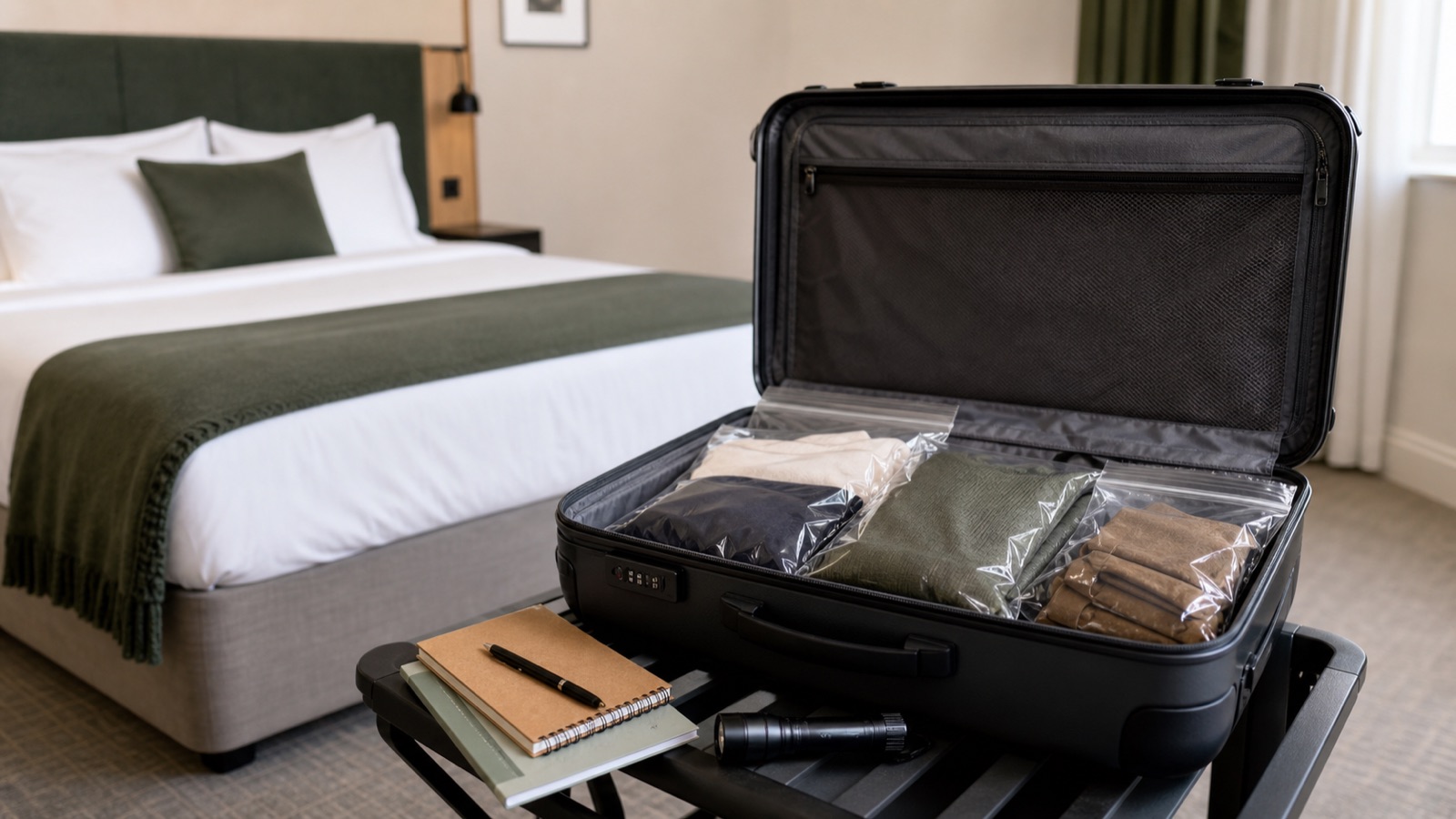
- Keep returned luggage off beds and upholstered furniture.
- Inspect seams, pockets, zips, wheels and rigid joins in good light.
- Move clothing in a controlled way and follow each item's care label.
- Report factual physical evidence to the accommodation provider.
Before your bags enter the bedroom
If you start to worry on the way home, pick a checking spot before the case reaches a bedroom. A bathroom, utility room or other bare hard floor is easier to light and clean than a bed or a carpet. Keep the case shut while you carry it there.
This is a sensible precaution, not a diagnosis. Most trips do not bring home bed bugs, and a skin reaction cannot show where or when you met them. Our hub of bed bug help guides covers other situations in the same calm way.
Check the case step by step
Use a bright torch. Work round the outside first, then the inside, so you cover every part.
- Look at piping, stitched seams, zip folds and fabric overlaps.
- Look around wheels, handles, feet and hard shell joins.
- Check pockets and loose liners, and do not shake the contents out across the room.
- Photograph any possible sign before you touch it.
- Keep a suspected insect in a sealed clear pot or under clear tape.
Bed bugs can squeeze into very narrow gaps. A quick look into the open middle of a case does not check the seams. If you find something, compare it with our guide to where bed bugs hide.
Deal with clothes and belongings
Sort worn, unworn and delicate items into labelled bags. Do not make piles on the floor or carry loose clothes round the house. Follow the care labels.
The NHS advises washing affected bedding and clothing on a hot wash (60°C) and tumble drying on a hot setting for at least 30 minutes. However, not every travel item can take that heat. Our guide to laundry and clothes shows how to sort things safely.
Some items cannot take the wash or the heat, so they need their own plan. Do not try ovens, heaters, boiling water or unlabelled chemicals. A pest professional can advise on safe options when you have clear signs. Your council’s pest-control service may also help.
A vacuum may pick up some insects from the empty case, yet it cannot prove every seam is clear. Empty the vacuum straight away. Then keep the checked case apart from your other things while you watch for signs or ask for help.
If you found signs where you stayed
Tell the hotel or host the room number, the dates and the exact spot of the sign. Send your clearest photos and keep the originals. Ask them to log your report. Do not claim you are certain until someone qualified has looked at the insect or sign.
If you are still there, ask for a room that does not share a wall with the problem room. Check the new bed area before you open your bags. Keep your bags on a luggage rack, away from the bed and walls, because soft chairs and beds give insects an easy route.
Watch for signs at home
Note the date of your check and any new signs. Keep checking the main sleeping area at a steady pace, and do not pull the house apart each day. If you confirm an insect or the signs come back, book a professional check. Tell them where you travelled and what you have already done.
Health symptoms need their own decision. Follow NHS advice if bites are painful, swollen, infected or worrying. Treating the home cannot diagnose or manage a skin reaction.
Next steps if you live in a shared building
The rules differ if you rent or share a building.
Read about landlord responsibilities before you write to your landlord.
Also, if a sofa sat near your bags, see our advice on sofas and upholstery. Travelling with a young family? Read about bed bugs and children. If you came home by train or bus, our guide to public transport explains what that means.
If you want help after checking, you can ask for help and we will pass your enquiry to a UK pest control company that covers your area. We may receive a fee for this. The company is an independent business.
Local services also vary. For example, you can read about the council route in Coventry, bed bug help in Leeds, and council pest control in Brighton and Hove.
Questions people also ask
Do bites after a hotel stay prove the hotel had bed bugs?
No. Skin reactions have several possible causes, and they can appear at different times. Physical evidence from the room or luggage gives a more reliable basis for identification and reporting.
Should I put my suitcase on my bed to unpack?
Not if you suspect exposure. Use a hard, well-lit surface away from sleeping and upholstered areas. That way you can check the seams and see any material more easily.
Can I put every travel item in a tumble dryer?
No. Check care labels and protect heat-sensitive items. The NHS gives general laundering and hot-drying advice, but the manufacturer's instructions for each item still matter.
Sources and review notes
This page is written by the BedbugExtermination.co.uk editorial team. It has not yet been reviewed by an independently named pest-control professional. Health and pesticide statements are kept within the scope of the official sources below.
- Bedbugs
NHS