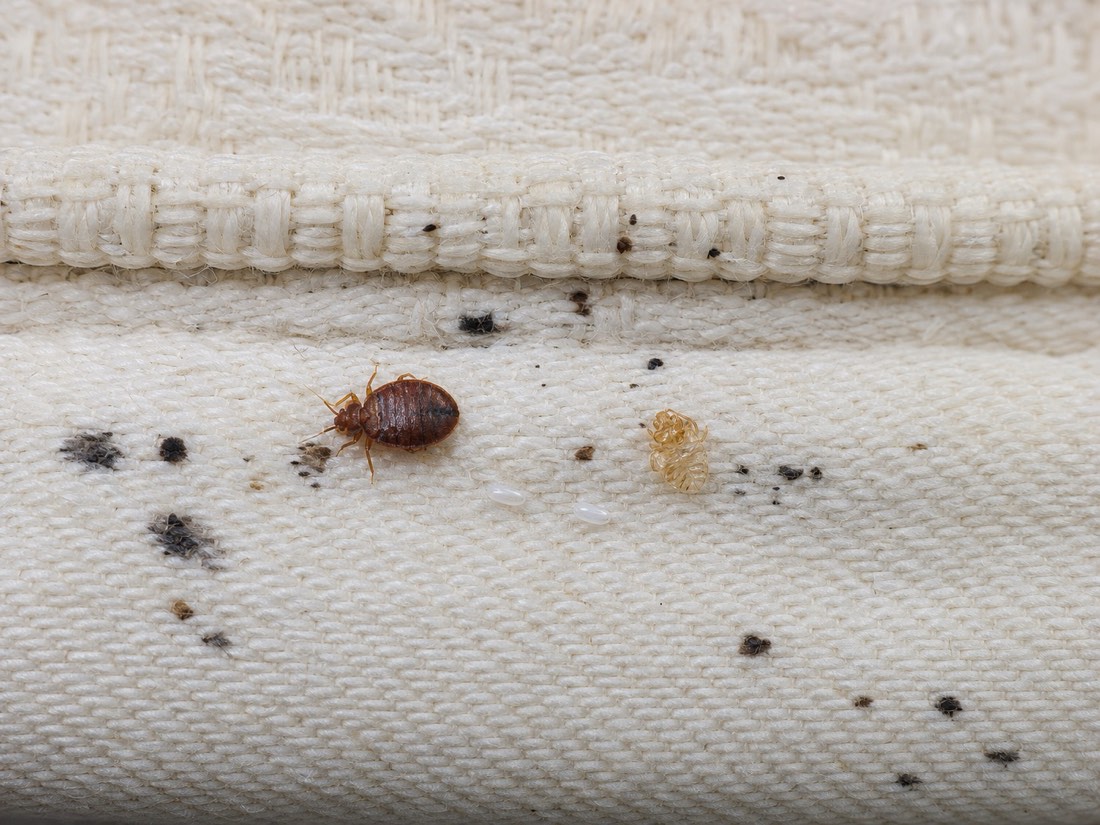
- Check protected edges and joints near the sleeping position first.
- Upholstered furniture can host bed bugs when people rest there regularly.
- Where the evidence turns up helps define the inspection and treatment area.
Think in edges, pressure and access
A good hiding place offers darkness, protection and a short route to a sleeping person. Mattress piping and bed-frame joints meet all three. Open surfaces that people often disturb do not.
For this reason, a methodical check of edges usually tells you more than staring at the middle of a sheet. If you are not yet sure what you are looking for, our guide to the early signs of bed bugs shows what to spot.
Highest-priority bedroom locations
Begin with the seam and the underside edge of the mattress. Then work through divan fabric edges, staples, drawer runners, screw holes, slat supports and headboard brackets. Check the back of a freestanding headboard too, plus the narrow gap where it meets the wall. While you search, use a torch.
Next, inspect the furniture right beside the bed, because bugs can sit close to where you sleep. The underside of a drawer or an unsealed furniture joint can matter more than the items inside it. Only after you finish the bed itself should you follow the skirting and flooring edges.
Why location depends on feeding
Bed bugs shelter close to a regular host, so the sleeping area comes first. Our guide on how long bed bugs can live without feeding explains how long they may stay hidden. In addition, what attracts bed bugs shows why the area around a bed matters.
The life cycle of a bed bug also helps you judge what you find. It is worth a read before you start.
Sofas and alternative resting places
Some people sleep or rest on a sofa for long periods. If that is you, inspect the cushion seams, zips and the frame beneath removable cushions. Check the fabric stapling underneath as well.
Evidence in a sitting room does not mean every soft item has bed bugs. However, your inspection should cover the places where people rest for long periods. For instance, a bed bug on the sofa means you should check the sofa and the bed.
Wall and room-edge harbourages
The NHS lists picture backs and loose wallpaper among possible hiding places. Cracks around skirting, cable gaps and poorly fitted trim can also give cover. Therefore, widen your search once the bed itself is clear. Take special care with electrical fittings. Never push tools into them or spray liquid onto them.
If you are unsure what you found, learn how to tell bed bugs from fleas before you act.
Belongings that can move the problem
Luggage, bags, folded clothing and second-hand furniture can carry a hidden insect from place to place. Keep your response calm and controlled. Isolate the item, check its seams and follow treatment instructions suited to the material.
Throwing loose possessions into another room is a common mistake. As a result, the spread becomes harder to understand and harder to treat.
Shared walls and flats
In a flat, shared walls make the hiding pattern especially important. Cracks and gaps can give bed bugs cover, so a careful inspection matters. Our guide to bed bugs in flats covers what to do next.
What the hiding pattern tells a professional
Evidence limited to one bed joint may suggest a different scale of work from evidence spread across a headboard, a bedside unit and a sofa. A good assessment explains which rooms and items count as affected. It also states which nearby areas the team will check. In addition, it explains why the chosen treatment reaches the relevant hiding places.
Local conditions vary, so see our pages on bed bug help in Liverpool, bed bug help in Leeds, and council pest control in Nottingham for council routes and renting rules in those cities. For the full picture, return to our guide on how to identify bed bugs.
Questions people also ask
Can bed bugs hide in walls?
They can use cracks, gaps, loose wallpaper and spaces around fittings, particularly when activity has spread. Never spray liquid products into electrical fittings.
Do bed bugs live in clothes?
Clothing can give bed bugs temporary shelter and help move them around, especially when left close to an affected bed. However, it is not their only hiding place, and it is not necessarily their main one.
Sources and review notes
This page is written by the BedbugExtermination.co.uk editorial team. It has not yet been reviewed by an independently named pest-control professional. Health and pesticide statements are kept within the scope of the official sources below.
- Bedbugs
NHS