- The NHS says to contact your council or a pest control service to get rid of bed bugs.
- Wash affected bedding and clothes at 60C, then tumble dry hot for at least 30 minutes.
- Pause the movement of belongings between rooms.
- Keep a specimen or clear physical evidence if you can.
- Inspect the bed and immediate resting area before you look further out.
- Avoid improvised chemical mixtures and premature disposal.
How to get rid of bed bugs in the UK
The NHS advises contacting your local council or a pest control service if you think you have bed bugs. It says getting rid of them yourself is very hard, because they are difficult to find and may resist some insecticides. So home steps help, but they rarely finish the job alone.
In practice, getting rid of bed bugs has three parts:
- Confirm it. Check that the insect or sign really is a bed bug. Our bed check guide and identification guide show how.
- Get proper treatment. Councils may provide pest control, and GOV.UK says they may charge a fee. You can also hire a private pest controller. See our bed bug treatment hub and the guide to professional treatment.
- Prepare and check afterwards. Good prep helps any method work, and a follow-up check shows whether it worked. Read preparing for treatment and after treatment.
If you want help finding a UK pest control company, use our request help page. We are an independent guide and do not treat homes ourselves. We pass your enquiry to a UK pest control company that covers your area, and we may receive a fee for the referral. The company is an independent business, so confirm the scope, method, price and follow-up with it directly.
What you can safely do yourself
These steps are low risk and match NHS advice:
- Wash hot. Wash affected bedding and clothing at 60C, then tumble dry on a hot setting for at least 30 minutes. Check the care label first. See clothes and laundry.
- Freeze what you cannot wash. The NHS says to seal the item in a plastic bag and freeze it for 2 to 3 weeks.
- Clean and vacuum. Regular cleaning makes early signs easier to spot. Empty the vacuum straight away.
- Cut clutter near the bed. The NHS advises keeping clutter away from your bed.
- Check before you bring things in. Look over second-hand furniture and luggage. Our second-hand furniture guide explains how.
A mattress encasement can also help, but it is not a cure by itself.
The first hour
A scary mark or insect often leads people to wash, spray, move or bin everything. That rush can destroy proof. It can also move belongings before anyone knows how far the problem reaches. A calm first hour works better.
- Stop moving loose bedding, bags and furniture to other rooms.
- Photograph the sign where it sits, with one wider shot that shows the spot.
- If you can do it safely, trap a suspected insect in a sealed clear pot or under clear tape.
- Note who sleeps in the room and whether bags or used furniture arrived lately.
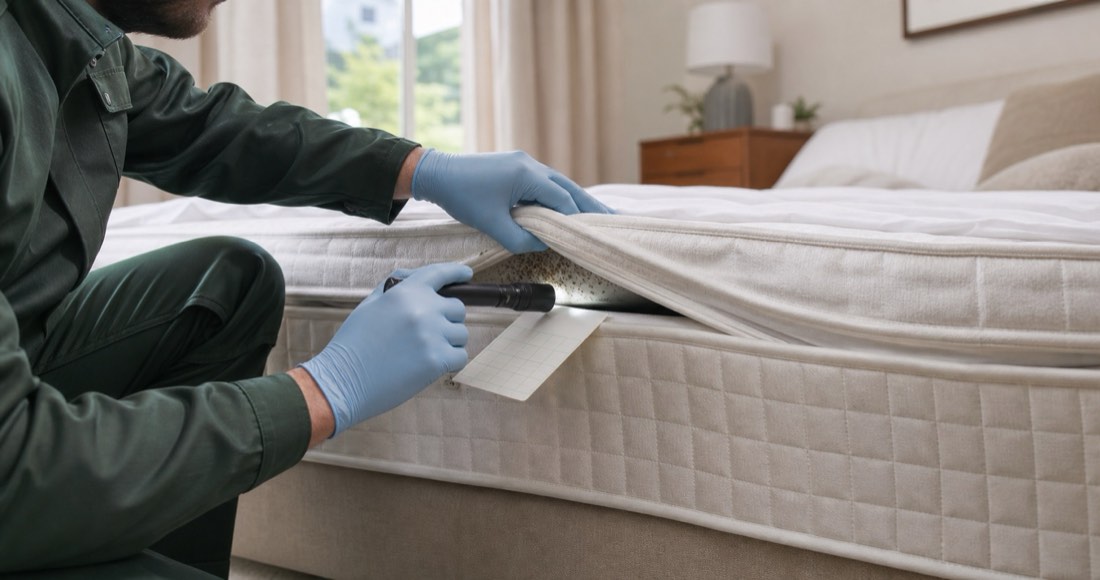
- Check the mattress seams, bed joints, headboard fixings and nearby furniture with a bright torch.
Do not turn the search into a whole-house clearout. Start near where people sleep, because bed bugs want to reach a host and hide in cracks and seams. If you have just come back from a trip, see our guide to bed bugs after travel.
What counts as stronger proof?
A confirmed insect is stronger proof than a bite pattern. Dark spots in hiding places, shed skins and eggs found with other signs also help. However, each one can look like something else, so context and an expert opinion matter.
Skin reactions vary from person to person and may show up late. Their place or pattern does not show which insect caused them. Treat worrying symptoms as a health question. Treat the signs in your home as a separate question.
For younger skin, our guide to bed bugs and children covers the extra care needed.
Actions to avoid
The biggest mistake when you try to get rid of bed bugs is using the wrong chemicals. The HSE gives clear rules for biocides, the group that includes insecticides:
- Read the label first and follow it exactly.
- Note the product’s authorisation or approval number, where it has one, in case of an accident.
- Use a product only for the job on its label. A product approved for one use must not be used for another.
- Members of the public should use only products meant for general public use. Professional-only products are off limits.
- Store products in their original sealed containers, away from children and pets.
- Dispose of waste and empty containers as the label and your council say.
The HSE also says to consider non-chemical methods first, and that a professional pest controller is an option if you do not want to handle products yourself. Our guides to home products and chemical treatment cover the limits in more detail.
Do not mix pesticides, bring farm or garden products indoors, or use a product anywhere its label does not allow.
Do not carry a bare mattress through shared halls. Do not move to a sofa or another bedroom as a routine step without advice. A new sleeping spot can change the pattern that a professional needs to read later. If a sofa may hold bed bugs, read about sofas and upholstery.
Do not sleep away for good while you leave a lived-in home untreated. Empty rooms give no quick fix, and the delay may hold up action based on proof.
Make a small containment zone
Keep the torch, your notes, a clear sample pot and a few strong bags near the area. Use bags only for a set purpose, label them and keep clean and unchecked items apart. Follow clothing care labels, because not every item can take a hot wash.
A vacuum may pick up some insects, but it can also remove proof. Photograph or collect the sign first. If you vacuum, empty it straight away so nothing gets back into the home. Remember that the surfaces you can reach are only part of the hiding area.
Decide whom to contact
If you rent, share a building or stayed away, report clear signs quickly and factually. Our guides to renting and hotels show how. At work? See bed bugs in workplaces.
However, if you own the home, compare professional plans by check depth, rooms covered, prep, methods, visits and follow-up. Do not compare them by one headline price.
Ask any provider how they will confirm the insect, record the affected areas and judge whether the work has worked.
Local help and more guides
Council services differ across the UK. Therefore, also read council pest control. For local detail, read about bed bug help in Swansea, the council route in Edinburgh, and council pest control in Newcastle upon Tyne.
For heat and steam methods, see heat treatment and steam treatment. If treatment has not worked, read when treatment is not working. You can find every situation guide in our bed bug help hub.
Questions people also ask
How do I get rid of bed bugs in the UK?
The NHS advises contacting your local council or a pest control service, because bed bugs are hard to find and can resist some insecticides. While you arrange that, wash affected bedding and clothes at 60C, keep belongings where they are and avoid unapproved sprays.
What temperature kills bed bugs in the wash?
The NHS advises washing affected bedding and clothing at 60C and then tumble drying on a hot setting for at least 30 minutes. Check the care label first, as some fabrics cannot take that heat.
Can I get rid of bed bugs myself?
You can take safe first steps, such as hot washing, freezing items that cannot be washed and cleaning around the bed. The NHS says doing it yourself is very hard, so home methods are unlikely to clear an infestation completely.
Should I throw my mattress away?
Not as a first response. Disposal may be unnecessary, and it can spread bed bugs while you move the item. It also does not deal with insects elsewhere in the room. Get the evidence and scope assessed first.
Can I use a bug spray immediately?
Do not apply products at random. A product needs approval for its job, and the label says where and how you may apply it. Unplanned use can interfere with inspection.
What is the best evidence to keep?
A safely contained specimen is especially useful. Clear close-up and wider photographs also help. Photograph insects, cast skins, eggs or spotting, and note the exact location and date.
Sources and review notes
This page is written by the BedbugExtermination.co.uk editorial team. It has not yet been reviewed by an independently named pest-control professional. Health and pesticide statements are kept within the scope of the official sources below.
- Bedbugs
NHS - Using biocides safely
Health and Safety Executive - Pest control on your property
GOV.UK