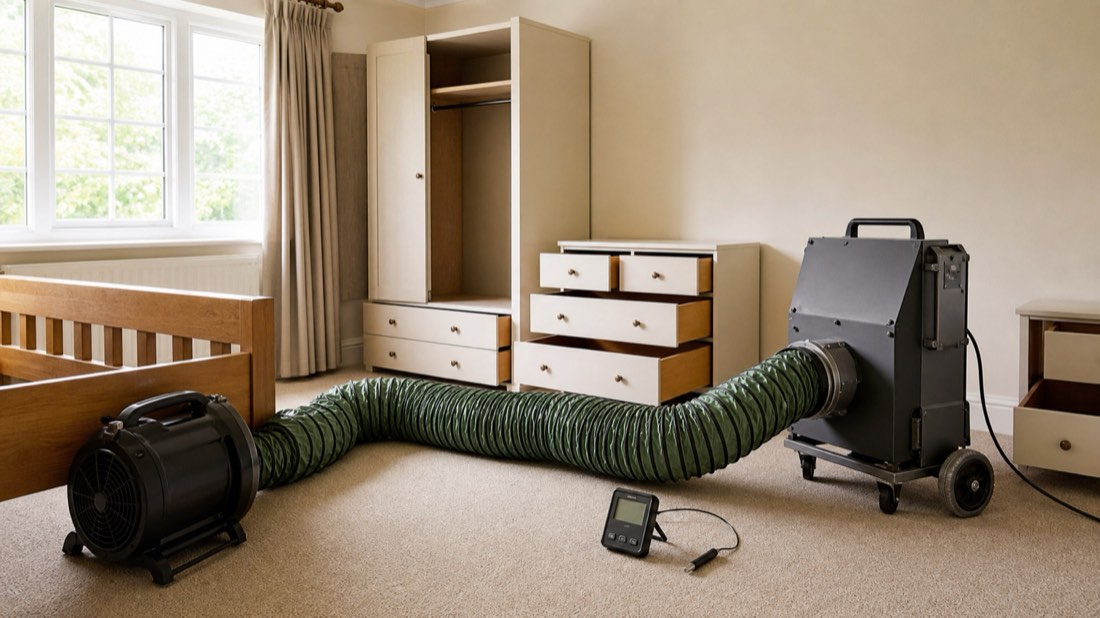
- An encasement removes the mattress and box spring as hiding places, but bugs elsewhere in the room stay put.
- Interceptors under the legs show whether bugs are still reaching the bed.
- Check the zip and seams often, and do not remove the cover early.
- Neither tool replaces a full treatment plan.
What an encasement does
A mattress encasement is a zipped cover that seals a mattress or box spring. The idea is simple. Bed bugs already inside the bed cannot get out to feed, and new bugs cannot get in to hide.
Mattresses are full of seams, tufts and folds. These are hard to inspect and hard to treat. However, a cover turns all of that into a smooth surface, so you can see any bug that sits on the outside. As a result, later checks are quicker, as the early signs guide explains.
What an encasement cannot do
Bed bugs do not live only in the mattress. They also hide in the bed frame, headboard, nearby furniture and cracks in the room. A cover does nothing about those places. If you only cover the mattress, bugs elsewhere can still reach you.
For that reason, an encasement is a support tool. The NHS says it is very difficult to get rid of bed bugs yourself, because they are hard to find and may resist some insecticides. It also says home measures are unlikely to remove them completely. Treat the cover as one part of a plan, then add a proper method such as chemical treatment, steam treatment or heat treatment.
Choosing and fitting a cover
Look for a cover made for bed bugs, not a general dust-mite cover. Check that the zip closes fully and that the seams are intact. A gap that a small bug can slip through defeats the point.
When you fit it, follow these steps:
- Strip the bed and wash the bedding as advised in our clothes and laundry guide.
- Inspect the mattress and box spring before you cover them, and note anything you find.
- Pull the cover on slowly, so you do not tear it.
- Close the zip right to the end, then check the corners.
- Run your hand along the seams once a week and look for rips.
If you tear the cover, repair it with strong tape straight away, then check inside the tear for bugs.
How interceptors work
Interceptors are small dishes that sit under the legs of a bed or sofa. Bed bugs climb up the legs to reach people, and they climb down again afterwards. The dish has a smooth wall, so bugs that fall in cannot escape.
The NHS says bed bugs can be hard to find, so a dish can show activity that a quick look misses. That is why people use them after treatment.
Shop-bought dishes are widely sold. Check and clean them every week.
Using interceptors well
Interceptors only work if the bed is isolated. Pull the bed away from the wall. Tuck bedding up so it does not touch the floor. Keep curtains and clothes off the floor near the bed. If a quilt hangs down to the floor, bugs can walk across it and skip the dishes entirely.
Also, count what you catch each week and write it down. A falling count suggests treatment is working. A steady or rising count tells you to call your provider back. Our guide on detection dogs and monitors covers other ways to check for activity.
Common mistakes
A few small errors cause most failures. First, people leave the zip slightly open. Second, they leave a gap between the cover and the bed base, so bugs can slip in. Third, they let the bedding touch the floor, which gives bugs a bridge over the interceptors. Fourth, they forget to check the dishes each week.
So fix these and the tools work much better. Keep a short checklist on your phone, and tick it off when you change the sheets.
What to expect day to day
Most people notice one change quickly. The bed feels the same, and the cover is easy to wipe, but you now have fewer places to look. Check the cover seams on laundry day, and look at the interceptor dishes while you make the bed. Write the count on a calendar.
Do not expect bites to stop at once. Bugs elsewhere in the room can still bite, which is why the cover cannot work alone. If bites continue, say so when you talk to your provider, as it helps them decide whether to add a visit.
Where these tools fit in a plan
A sensible order looks like this. First, confirm you have bed bugs. Next, arrange treatment. Then add the cover and interceptors to protect your sleep and track progress. The same tools also help after treatment, because they let you spot any bugs that survive. See what to do after treatment for the follow-up checks.
Be careful with home-made products. The HSE says a biocide must only be used for the purpose on its label, so avoid pesticides that are not meant for bed bugs. Rubbing alcohol, kerosene and petrol are also a fire risk. Our guide to home bed bug products, powders and sprays explains the safety rules in more detail.
Getting help
If you cannot tell whether the bugs are gone, or the count keeps rising, ask for advice. Some councils offer a pest service for bed bugs, but coverage and charges vary. You can read about council pest control in Liverpool and council pest control in Birmingham as examples of how local routes differ. For another example, see bed bug help in Sheffield. For a wider view of the options, see the bed bug treatment overview.
Questions people also ask
Will a mattress encasement get rid of bed bugs?
No, not on its own. A sealed cover traps bugs inside the mattress and stops new ones hiding there. Bugs in the bed frame, walls and furniture are not affected, so you still need a wider treatment plan.
How do interceptors work?
They sit under each leg of the bed or sofa. Bed bugs climbing up or down the leg fall into the dish and cannot climb out. They work as a monitor and a partial barrier, and they need checking every week.
Can I make my own interceptors?
Shop-bought interceptor dishes are sold, so there is little need to make your own. Whichever type you use, check and clean it every week, and treat it only as a monitoring aid.
When can I take the encasement off?
Do not remove it early. Ask your pest controller how long to keep it on and how to check it for damage. A torn or unzipped cover lets trapped bugs escape.
Sources and review notes
This page is written by the BedbugExtermination.co.uk editorial team. It has not yet been reviewed by an independently named pest-control professional. Health and pesticide statements are kept within the scope of the official sources below.
- Using biocides safely
Health and Safety Executive - Bedbugs: getting rid of them
NHS