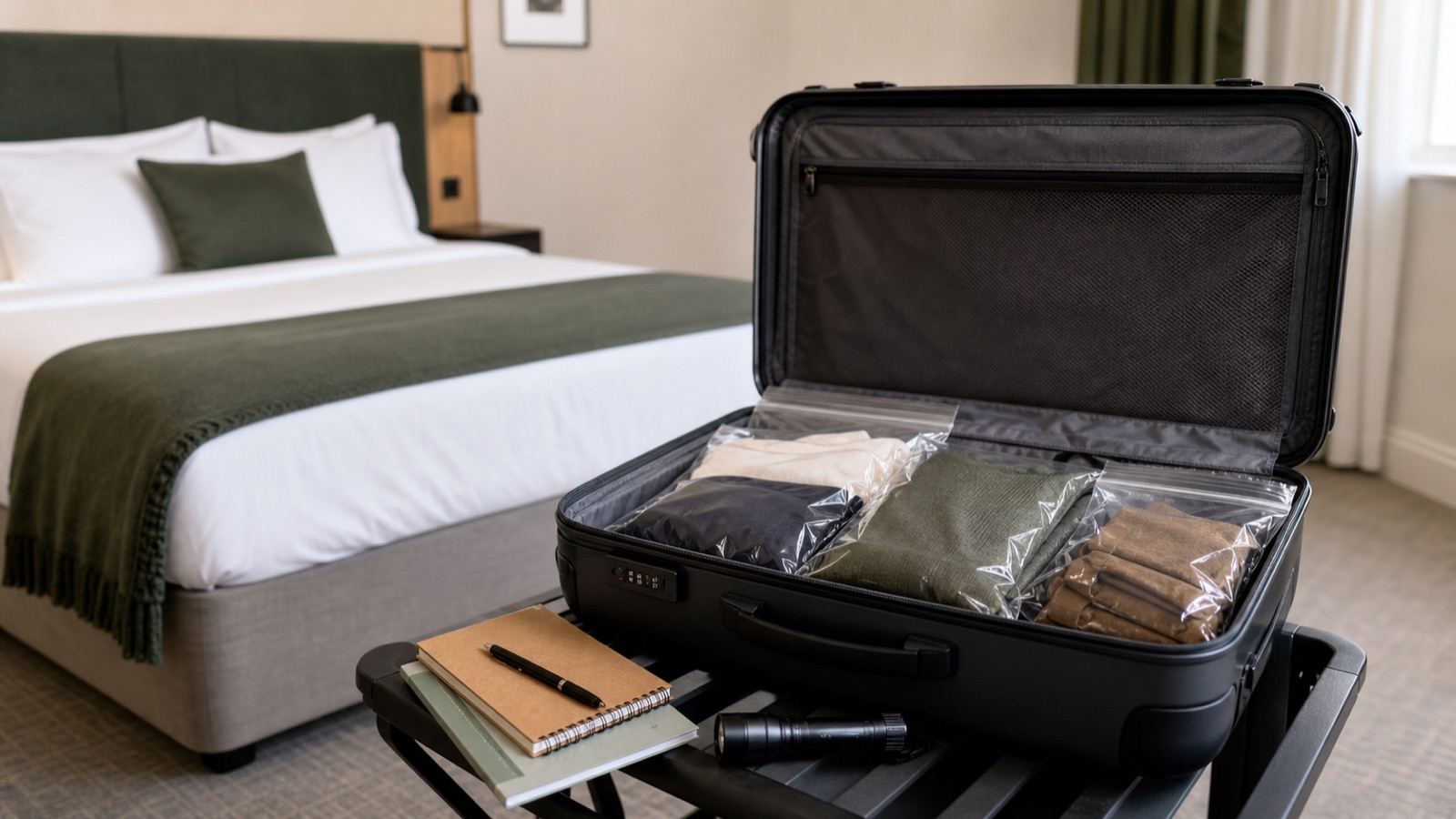
- Check the mattress, headboard and luggage rack before you unpack.
- Keep luggage on a rack, away from the bed and the floor.
- Cleanliness does not decide whether a room has bed bugs.
- Unpack into the washing machine at home, wash at 60C and tumble dry hot.
Why hotels and holiday lets need a quick check
Bed bugs travel with people. The Natural History Museum says the risk is greatest in hotels and guest houses, because guests may bring bugs in with their luggage. A busy hotel or holiday let sees a lot of luggage, so a room can pick them up without anyone noticing.
Most stays are fine, so there is no need to panic. A short check is enough because it costs you very little time. The same advice applies to a B&B, a hostel or a rented flat.
Cleanliness is not a guide. Hastings Borough Council says bed bugs are attracted by exhaled carbon dioxide and body heat, not dirt. A smart hotel can have them, and a basic one can be free of them.
Check the room before you unpack
Keep your bags by the door or in the bathroom while you look. The NHS says bed bugs hide in bed frames, mattresses and furniture, so check those with a torch. Newcastle City Council adds that bugs travel in luggage, so check the rack and your bags too. Here is a simple order to follow.
- Pull back the sheets and check the mattress seams and piping.
- Look behind the headboard and along the bed frame joints.
- Check the luggage rack and any upholstered chair.
- Look for live bugs, shed skins and rusty or dark spots.
The NHS describes bed bugs as around 5mm long and dark yellow, red or brown. They hide in bed frames, mattresses, furniture and clothing. Hastings Borough Council lists a musty odour as another possible sign. A single speck proves nothing on its own, so photograph anything odd and ask for a second opinion.
Keep luggage off the bed and the floor
Use the luggage rack, and keep it away from the wall and the bed. Newcastle City Council says bed bugs are often carried in luggage, so a rack that keeps your case off the bed and floor gives them fewer ways in.
Zip your bags closed when you are not using them. For example, hang coats and bags where they do not touch the bed. If the room has no rack, the bathroom floor is usually a safer choice than the carpet.
If you find signs while you are away
Stay calm and do not unpack, because moving your things around can spread any bugs. Tell the manager or host straight away, and give the room number and what you found. Photograph it before anyone moves it.
Ask for a different room, but not one that shares a wall with the first. As a result, you lower the chance of a repeat. Then repeat the check in the new room before you open your bags. If the host will not help, a holiday let may leave you with a refund question, so keep your photos and messages.
What to do when you get home
Unpack outside the bedroom if you can. For instance, a utility room or hallway works well. Putting washable clothes straight into the machine saves handling them twice. If you know the place you stayed had bed bugs, the NHS and Newcastle City Council both say to check luggage and clothing carefully before taking them indoors.
The NHS says to wash affected bedding and clothing at 60C and tumble dry on a hot setting for at least 30 minutes.
Check the care label first, since some items cannot take the heat. However, most everyday clothes cope well. Then look over the empty case, paying attention to seams, wheels and pockets. Never store a suitcase under your bed, because bed bugs travel in luggage. Store it somewhere away from where you sleep instead.
Our guide to what to do after travel walks through this step by step. You can also read about where bed bugs hide so you know what to look for in your own home.
Small habits that lower the risk
A few routines make every trip easier. Pack clothes in sealed bags, because they keep items away from seams you cannot see. Keep a small torch in your washbag so you can check quickly. Also take photos of the room when you arrive, since they help if you need to report a problem later.
Short stays and long stays carry the same advice. A holiday let may have more furniture than a hotel room, so check sofas and bed bases as well. In addition, wash and dry your travel clothes soon after you return, rather than leaving them in the case.
If you think they came home with you
Bites alone do not tell you where you picked them up, because many things cause them. The NHS says bites are often on skin exposed while sleeping, and that they usually clear within a week. They can look red or pink on lighter skin and brown, red or purple on darker skin.
Start with what to do first. Then check the car you travelled in if you came by road, since luggage often rides in the boot. If you buy anything new for the trip home, look over any second-hand furniture with the same care.
Renting? Your landlord may need to know, so read about bed bugs and renting before you decide who pays for treatment.
Council help differs from place to place, so check the local page for where you live. For example, see council pest control in Glasgow, bed bug help in Bristol or council pest control in Cardiff. Our main bed bug help hub lists every situation we cover.
When to ask for help
If you have credible signs at home, a professional inspection is the next step. The NHS notes that bed bugs can be hard to find and may resist some insecticides. You can request help through our enquiry form. We are an information and referral site, so we do not carry out treatments ourselves.
Questions people also ask
Does a clean hotel mean no bed bugs?
No. Hastings Borough Council says bed bugs are attracted by exhaled carbon dioxide and body heat, not dirt. A clean-looking room can still have them, so check every room.
What should I do if I find signs in my room?
Do not unpack. Tell the manager or host, photograph what you found and ask for a different room that is not next door. Inspect the new room before you open your bags.
Will bed bugs make me ill?
The NHS says bed bugs are not known to spread disease. Bites can itch, and they usually clear within about a week. See a GP if bites stay very painful or swollen.
Can I treat my luggage when I get home?
Wash what you can at 60C and tumble dry on a hot setting for at least 30 minutes, as the NHS advises. Check your case carefully, and store it away from the bedroom.
Sources and review notes
This page is written by the BedbugExtermination.co.uk editorial team. It has not yet been reviewed by an independently named pest-control professional. Health and pesticide statements are kept within the scope of the official sources below.
- Bedbugs
NHS - Bedbugs
Newcastle City Council - Bed bug (Cimex lectularius) identification guide
Natural History Museum - Pest control: bed bugs
Hastings Borough Council